
Narrative Poetry: Meaning, Characteristics, Types, and Examples
A poem can do more than capture a feeling. It can put a character on a road, place a problem in front of that character, and carry the reader through what happens next. That storytelling quality is at the heart of narrative poetry. Unlike a poem that mainly records a single mood or reflection, a narrative poem gives the reader a sequence of events to follow. It may be a brief story told in a few stanzas or a sweeping work that follows heroes, families, communities, or entire civilizations.
What Is Narrative Poetry?
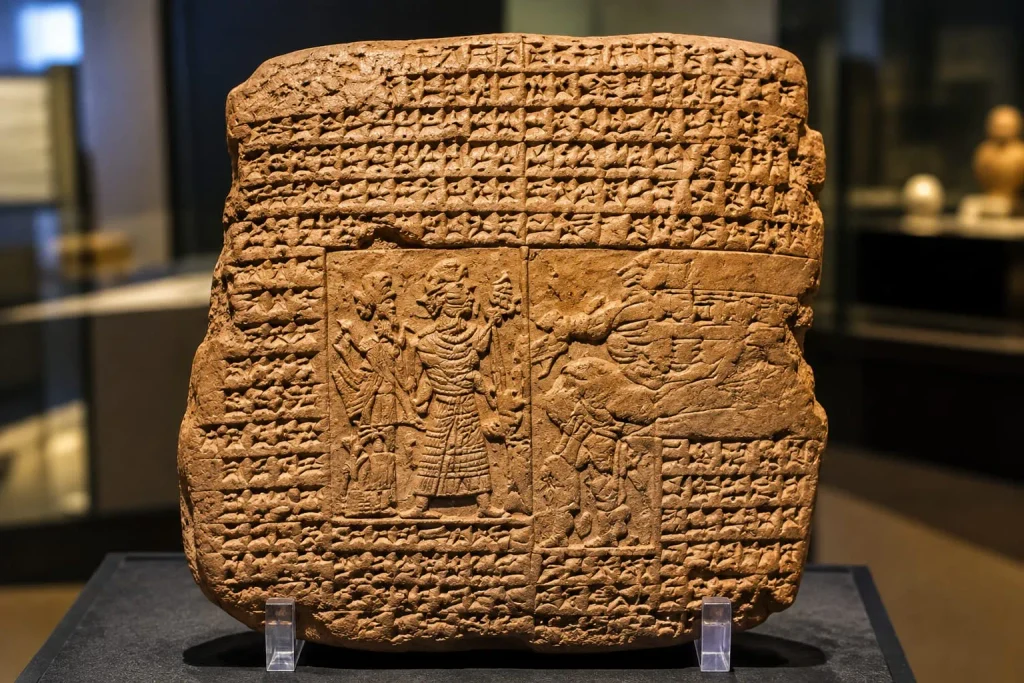
Narrative poetry is poetry that tells a story through verse. It normally presents characters, actions, a setting, a sequence of events, and some kind of change, consequence, or resolution. The story can be fictional, legendary, historical, autobiographical, or partly imagined. The poem does not have to rhyme, and it does not have to follow one fixed meter. What matters most is the presence of narrative movement: something happens, someone experiences it, and the reader can trace the development of the story.
The term is broad rather than rigid. Narrative poetry can include an epic, a ballad, a verse romance, a dramatic monologue with a strong story, or a modern poem that compresses a larger life into a small number of scenes. The Poetry Foundation treats narrative as a recognizable poetic mode, while the Academy of American Poets presents examples that show how widely storytelling can operate inside verse. This flexibility is one reason the form has remained useful across centuries.
A useful test is simple: can you explain what happens in the poem without reducing it to a list of isolated images or feelings? If the answer is yes, the work has a strong narrative dimension. That does not mean every narrative poem has a neat beginning, middle, and ending. Some poems begin in the middle of an event, leave parts of the story unstated, or end with ambiguity. Even then, the reader is still following actions and consequences.
Key Features of Narrative Poetry
Narrative poetry combines the basic work of storytelling with the concentrated language of poetry. A reader may encounter a narrator, characters, dialogue, setting, conflict, and change, but these elements are shaped by line breaks, rhythm, sound, imagery, figurative language, and stanza form. Because space is limited, a single image or line can perform several jobs at once: it can move the plot, reveal a character, establish mood, and suggest a larger theme.
Story and Plot in Narrative Poetry
A story is the sequence of events, while plot is the way those events are selected and arranged for the reader. Narrative poems can manipulate that order. A poet may begin after an important event and reveal the earlier cause later, or may move between memory and the present. This is especially effective when the poem is short, because a few carefully chosen moments can imply a much larger history.
Characters and the Speaker
Characters give the story human or symbolic focus. The speaker may be a character involved in the action, a witness describing what happened, or a constructed voice telling a story from a particular perspective. The Academy of American Poets emphasizes that the poet and the speaker should not automatically be treated as the same person. That distinction matters in narrative poetry because a carefully created speaker can shape how readers understand every event.
Setting and Time
Setting tells readers where and when the action occurs, but narrative poetry often establishes place economically. A road, battlefield, bedroom, shoreline, village, or city street can be enough when a few precise details make the scene visible. Time can also be compressed. A poem may cover a lifetime in several stanzas or slow down one important moment so that the reader experiences it almost second by second.
How Does Narrative Poetry Work?
Narrative poetry works by making language carry both story and poetic meaning. In prose fiction, a writer can spend several paragraphs explaining a character, but a poem may use one image, one spoken line, or one repeated sound to suggest the same information. The result is a compressed form of storytelling in which the wording itself becomes part of the narrative experience.
Sound can also influence the pace of a story. Repetition may make a moment feel inevitable, a rapid rhythm can create urgency, and a slower pattern can make an emotional scene feel suspended. Line breaks matter too. A poet can delay a key word until the next line, creating emphasis or uncertainty. These techniques show why narrative poetry should be read as poetry first, even when the poem contains a clear plot.
Narrative Poetry and Lyric Poetry
Narrative poetry and lyric poetry are often discussed as contrasting approaches, but the boundary is not absolute. Narrative poetry emphasizes events, characters, and storytelling, while lyric poetry often concentrates on a speaker’s feelings, thoughts, perceptions, or a single moment. A poem can contain both. A narrative may pause for reflection, and a lyric may contain enough action to create a small story. Genre labels are useful guides, not walls that every poem must obey.
A practical way to tell the difference is to ask what changes. In a strongly narrative poem, an event usually causes something to happen or alters the situation. In a strongly lyric poem, the main movement may be a change in thought, emotion, perception, or attention. When both kinds of movement appear, it is more useful to describe the poem precisely than to force it into a single category.
Narrative Poetry and Prose Fiction
The difference between narrative poetry and prose fiction is not simply line breaks. A poem can tell a complete story while relying on compression, rhythm, sound, imagery, and deliberate lineation. A prose story can also be highly poetic, so the boundary is about how the work creates meaning rather than the physical shape of the page.
This distinction becomes especially clear in a novel in verse. The work may have the scale and character development of a novel, yet the story is delivered through poems. Modern verse novels show that narrative and poetry are not competing systems. They can work together to create a form that is intimate, fast moving, visually distinctive, and emotionally concentrated.
Types of Narrative Poetry
Narrative poetry has developed through many traditions, so there is no single complete list of types. Some forms are defined by length or subject, while others are associated with particular historical traditions. The following categories are among the most useful for understanding the field.
Epic Narrative Poetry
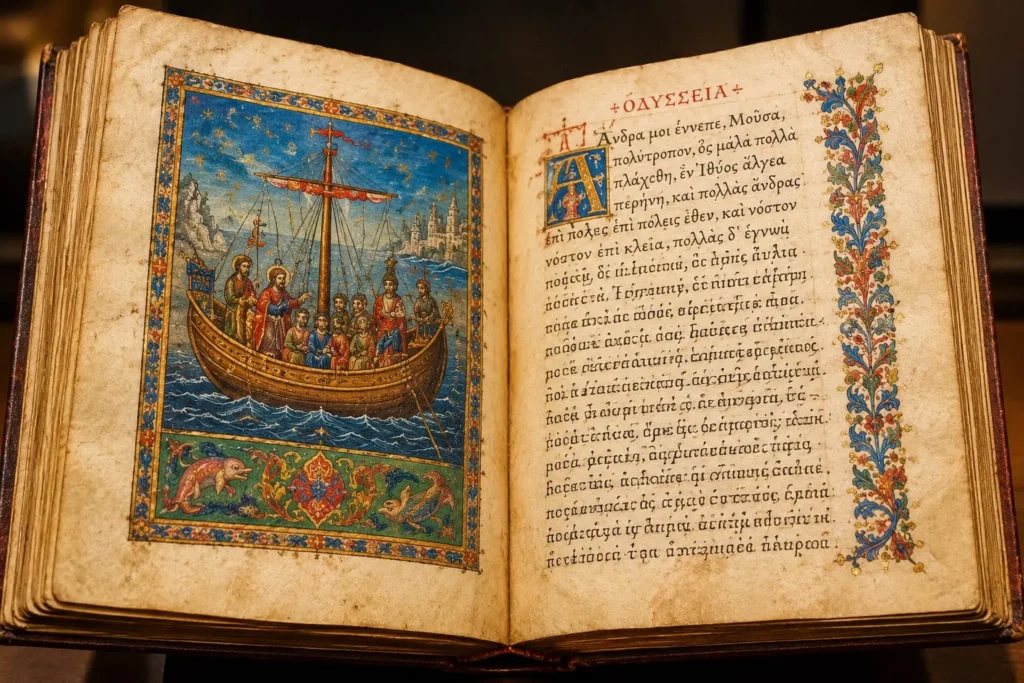
Epic poetry is a long form of narrative poetry that usually follows a heroic figure or group through events of major cultural, historical, or mythic importance. Examples include Homer’s Iliad and Odyssey, Virgil’s Aeneid, and Milton’s Paradise Lost. Epic poems often have large settings, elevated language, supernatural elements, major conflicts, and journeys that carry consequences beyond the individual hero.
Ballad Narrative Poetry
A ballad is usually shorter and more focused than an epic. Traditional ballads often move quickly through dramatic events and may use repetition, dialogue, regular rhythm, and memorable patterns of sound. They were closely connected with oral storytelling and performance. Modern poets have also used ballad techniques to tell stories about ordinary people, relationships, violence, loss, social conflict, and unexpected events.
Verse Romance and Chivalric Narratives
Verse romances tell stories of adventure, love, loyalty, conflict, and heroic or legendary figures. Medieval romance traditions often feature quests, tests of character, journeys, and encounters with unusual people or forces. The form demonstrates how narrative poetry can preserve cultural ideals while still giving readers dramatic characters and memorable scenes.

Famous Examples of Narrative Poetry
Reading well known examples is one of the fastest ways to recognize how flexible narrative poetry can be. The examples below come from different periods and use different structures. Together they show that narrative poetry can be heroic, mysterious, tragic, romantic, psychological, historical, or deeply personal.
The Iliad and The Odyssey
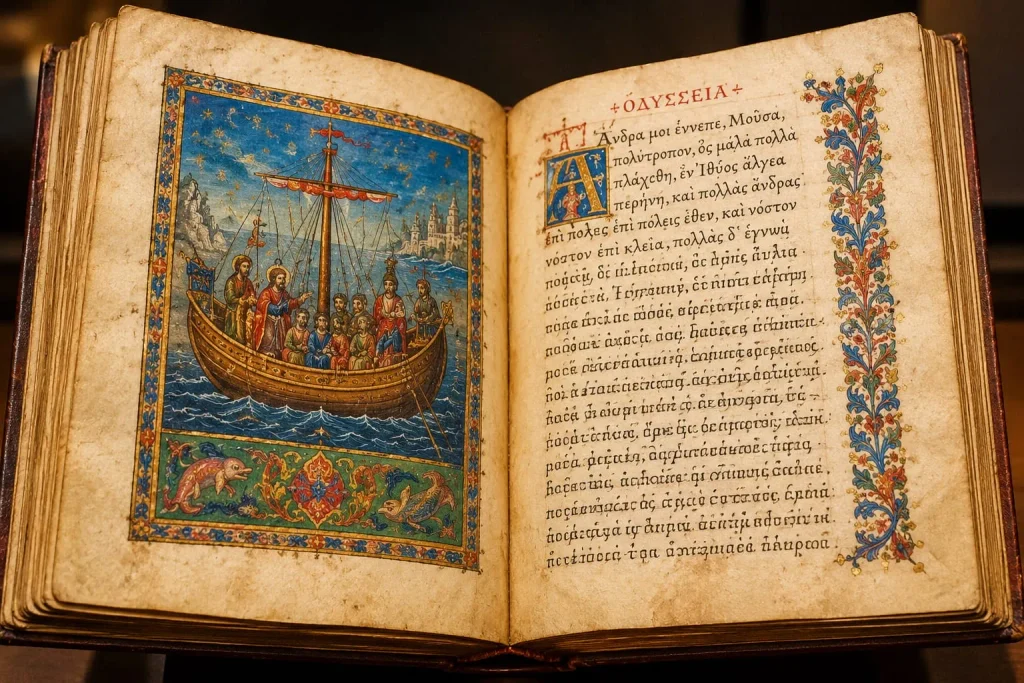
Homer’s Iliad and Odyssey are foundational examples of epic narrative poetry. The Iliad centers on a period of the Trojan War, while the Odyssey follows Odysseus through a difficult return journey after the war. Both works use heroic action, divine forces, speeches, repeated patterns, and extended episodes to build stories that are much larger than a single moment.
Beowulf
Beowulf is an Old English heroic poem that follows its central warrior through encounters that define his reputation and later challenge his role as a king. Its surviving manuscript is one of the most important witnesses to Old English literature. The poem shows how narrative poetry can preserve heroic values while also exploring age, mortality, leadership, courage, and legacy.
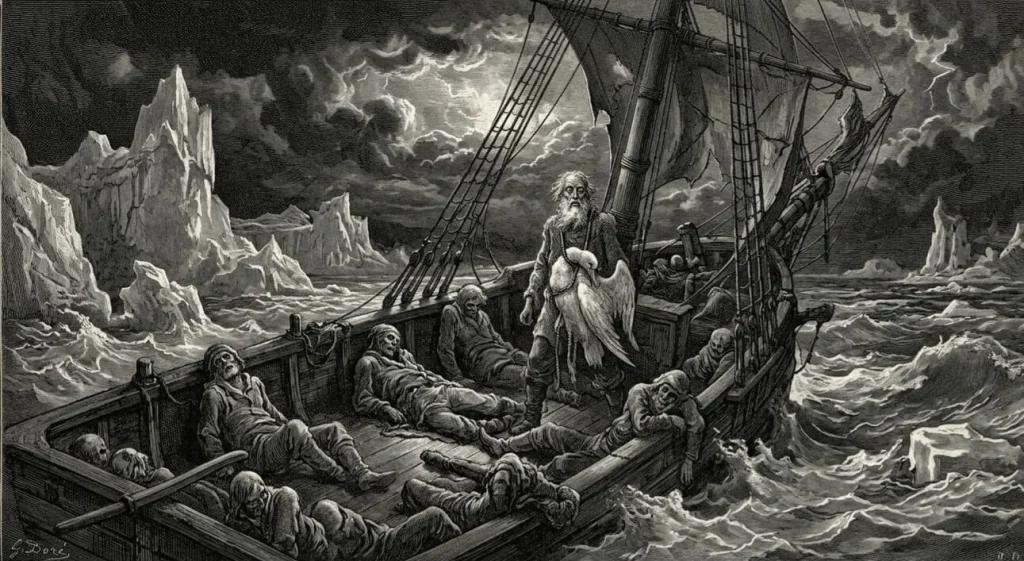
The Rime of the Ancient Mariner
Samuel Taylor Coleridge’s The Rime of the Ancient Mariner uses a framed storytelling situation to present a strange and unsettling voyage. The poem combines narrative events with vivid imagery, repetition, supernatural elements, and moral reflection. Its power comes partly from the way the storyteller’s voice controls what the listener learns and when the consequences of earlier actions become clear.
The Raven
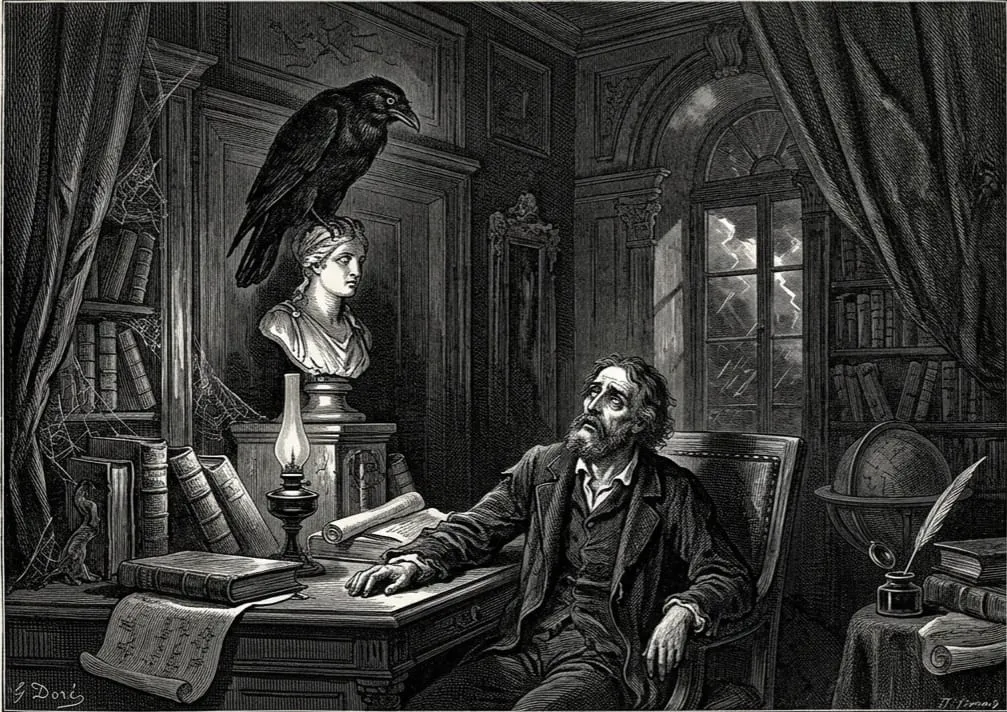
Edgar Allan Poe’s The Raven is often read as a poem of grief and obsession, but it also has strong narrative features. A speaker is in a particular room, an unexpected visitor arrives, a repeated exchange develops, and the speaker’s emotional state changes as the scene unfolds. Its example is useful because it shows that a narrative poem does not need a long adventure plot. A single dramatic encounter can be enough.
The Highwayman
Alfred Noyes’s The Highwayman is a widely taught example of a narrative ballad. It uses characters, setting, conflict, suspense, dialogue, repetition, and strong visual description to move a dramatic story forward. The poem also demonstrates how rhythm and recurring sounds can make a story feel fast and memorable when read aloud.
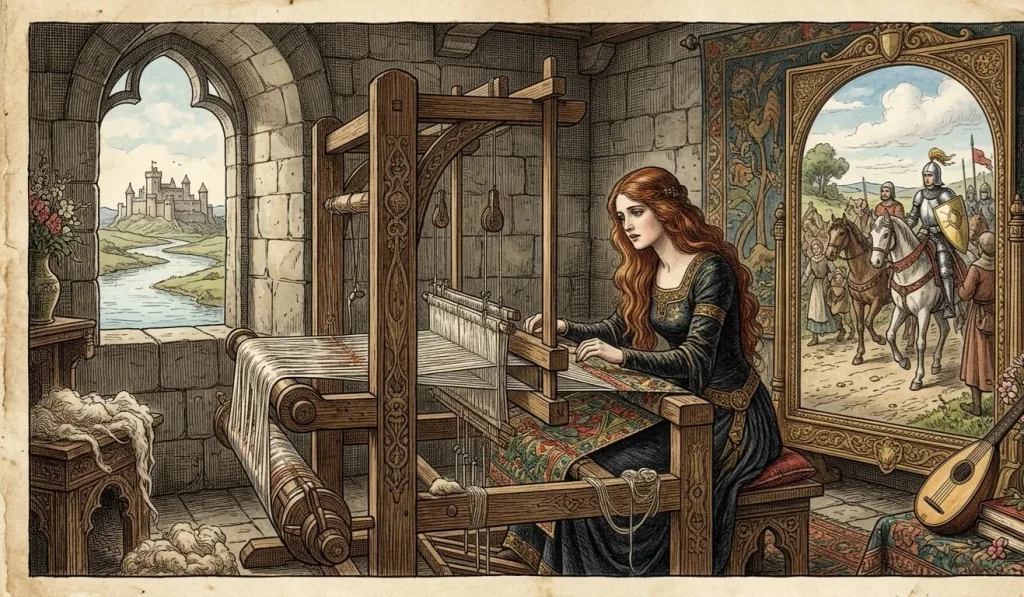
The Lady of Shalott
Alfred Tennyson’s The Lady of Shalott combines narrative, symbolism, atmosphere, and lyric intensity. The poem presents a mysterious woman living under a strange restriction, then follows the events that lead her toward Camelot and her final journey. Its changing scenes show how a narrative poem can carry a symbolic story while still giving readers concrete actions to follow.
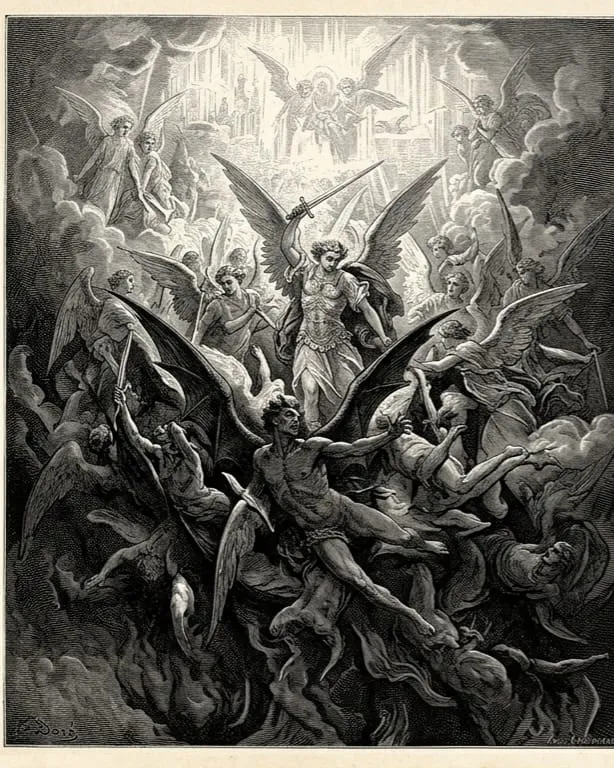
Paradise Lost
John Milton’s Paradise Lost is a major English epic. It presents a vast theological and cosmic narrative involving rebellion, temptation, the fall of humanity, and the consequences of disobedience. Its scale demonstrates the upper range of narrative poetry, where a poem can operate almost like an entire world of characters, locations, arguments, speeches, and connected events.
Common Characteristics of Narrative Poetry
Although narrative poems can look very different, several characteristics appear repeatedly. The strongest examples usually give readers enough information to understand who is involved, what is happening, where the action takes place, and why the events matter. They also use poetic techniques to shape the reader’s experience of those events rather than treating verse as ordinary prose with shorter lines.
A Clear Sequence of Events
The events do not always appear in chronological order, but there is usually a relationship between them. One event leads to another, a decision creates a consequence, or a revelation changes the meaning of what came before. This sense of connection is what separates narrative movement from a simple collection of unrelated images.
A Distinctive Narrative Voice
The voice telling the story influences how readers judge the events. A narrator may know everything, know very little, misunderstand what is happening, or deliberately hide information. A character narrator can make the poem intimate, while a more distant narrator can give it the feel of a legend or historical account. The voice is therefore part of the storytelling architecture.
Conflict and Change
Narrative poems often contain a conflict, although it does not have to be a physical battle. The central problem may involve love, identity, loyalty, guilt, social pressure, memory, nature, or an internal struggle. What matters is that the situation develops. The character may win, lose, learn, escape, change, or discover that the problem cannot be solved.
Poetic Devices That Support the Story
Narrative poets use imagery, metaphor, symbolism, repetition, alliteration, rhyme, meter, dialogue, and line breaks to control how the story feels. A repeated phrase can create suspense. A strong visual image can establish setting instantly. A sudden line break can delay a revelation. These techniques allow a poet to tell a story while also shaping its emotional and musical texture.
Why Is Narrative Poetry Important?
Narrative poetry matters because storytelling and poetry have been closely connected across literary traditions. Before modern mass literacy, verse could help stories travel through communities because rhythm, repetition, and memorable phrasing supported oral performance and recall. Even after writing became dominant, poets continued to use narrative verse because it offers a distinctive way to preserve stories while adding sound, compression, symbolism, and emotional intensity.
Narrative poetry also makes large subjects personal. A historical event can be presented through one person’s experience. A cultural conflict can appear through a family story. A myth can become a psychological journey. The form allows writers to move between the individual and the larger world, which is one reason narrative remains powerful in contemporary poetry.
How to Read Narrative Poetry
Start by identifying the basic story without worrying about every difficult phrase. Ask who is speaking, what has happened, what is happening now, and what the speaker or characters want. Then return to the poem and look at how the language changes the story. Notice repeated words, unusual images, shifts in pace, changes in tense, and moments where the speaker reveals information.
Next, separate the poet from the speaker. The speaker is the voice inside the poem, not automatically the poet. This distinction can prevent inaccurate biographical assumptions and helps you focus on how the poem constructs its point of view. Finally, ask what changes from the beginning to the end. The answer may be an event, a relationship, a belief, an emotional state, or the reader’s understanding of what actually happened.
How to Write Narrative Poetry
Start with a story that contains change rather than simply a topic. Instead of deciding to write about friendship, for example, choose a moment when two friends must make a difficult decision. A specific event gives the poem movement and gives you opportunities for character, setting, conflict, and consequence.
Choose the storyteller carefully. Decide whether the speaker is the main character, a witness, an outsider, or a voice looking back years later. The choice will determine what the reader knows and what remains hidden. Then select the moments that deserve space. A narrative poem becomes stronger when it trusts carefully chosen scenes instead of explaining every part of the story.
Finally, revise for both story and language. Read the poem aloud and listen for places where the rhythm becomes accidental or where a line exists only to explain something that could be shown through action. Check whether every scene changes the situation or deepens the reader’s understanding. Strong narrative poetry does not merely tell readers what happened. It makes the experience of the story matter.
Narrative Poetry in Modern Literature
Narrative poetry did not disappear when the novel became dominant. Contemporary poets continue to tell stories about family, migration, memory, identity, history, place, work, violence, love, and ordinary life. Some use traditional forms such as ballads, while others use free verse, fragmented scenes, dramatic monologues, or verse novels.
The modern form can therefore be highly experimental. A poet may combine documentary material with personal memory, shift between several speakers, or tell a story through a sequence of short poems. What remains important is the narrative impulse: the reader is invited to follow a chain of experience rather than receiving only a static description or isolated emotional statement.
Common Misconceptions About Narrative Poetry
One common misconception is that every narrative poem must rhyme. It does not. Rhyme can strengthen a narrative, especially in traditional ballads, but many narrative poems use blank verse or free verse. Another misconception is that narrative poems must be long. A short poem can tell a complete story if it selects the right details and creates meaningful movement.
It is also inaccurate to assume that narrative poetry is only about action. Strong narrative poems often contain reflection, symbolism, description, and emotion. The defining feature is not constant action but the presence of story and narrative development. A poem can pause for thought while still belonging to a narrative tradition.
Final Thoughts
Narrative poetry brings two powerful forms of expression together: the movement of a story and the concentrated language of verse. It can preserve a myth, dramatize a private memory, recreate a historical moment, or build an entire heroic world. Its forms range from short ballads to book length epics, and its techniques can be traditional or experimental.
The easiest way to understand the form is to follow the story first and then study the poetry that shapes it. Ask what happens, who tells it, what changes, and why the chosen language matters. Once you begin reading narrative poetry this way, familiar works often become richer because every image, rhythm, voice, and line break can contribute to both the story and its meaning.
FAQs
What is narrative poetry in simple words?
Narrative poetry is poetry that tells a story. It usually includes characters, events, a setting, and some form of conflict or change. The story is presented through poetic language, which means rhythm, imagery, sound, line breaks, and other poetic techniques can shape how the reader experiences the events.
What are the main features of narrative poetry?
The main features include a story or sequence of events, characters or a central speaker, a setting, narrative movement, and some kind of conflict, change, consequence, or resolution. Many narrative poems also use dialogue, imagery, repetition, rhythm, rhyme, symbolism, and distinctive line breaks.
Does narrative poetry have to rhyme?
No. Narrative poetry does not have to rhyme. Traditional ballads often use rhyme and regular rhythm, while many modern narrative poems use blank verse or free verse. Rhyme is a technique that can support the story, but storytelling is the central requirement.
What is the difference between narrative poetry and lyric poetry?
Narrative poetry mainly emphasizes events and storytelling, while lyric poetry often emphasizes a speaker’s feelings, thoughts, perceptions, or a single moment. The categories can overlap. A narrative poem can contain intense reflection, and a lyric poem can include a small story.
What are common types of narrative poetry?
Common types include epic poetry, ballads, verse romances, heroic poems, and some dramatic monologues and verse novels. The boundaries are flexible because poets have combined narrative techniques with many other poetic forms.
What is an example of narrative poetry?
Well known examples include Homer’s Iliad and Odyssey, Beowulf, Samuel Taylor Coleridge’s The Rime of the Ancient Mariner, Edgar Allan Poe’s The Raven, Alfred Noyes’s The Highwayman, Alfred Tennyson’s The Lady of Shalott, and John Milton’s Paradise Lost.
Why is The Odyssey considered narrative poetry?
The Odyssey tells an extended story about Odysseus and his difficult return journey after the Trojan War. It includes characters, settings, conflicts, journeys, speeches, supernatural encounters, and connected events. Its poetic meter and language shape the story rather than simply decorating it.
Is The Raven narrative poetry?
The Raven has strong narrative features because it presents a speaker, a setting, an unexpected visitor, a sequence of interactions, and a developing emotional situation. It is also highly lyrical and psychological, so it is a useful example of how narrative and lyric qualities can overlap.
Can a short poem be narrative poetry?
Yes. Length does not determine whether a poem is narrative. A short poem can qualify when it presents a connected event or sequence of events. The poet may imply a larger story through carefully selected actions, dialogue, images, and consequences.
How do you identify narrative poetry?
Look for a story you can summarize. Identify who is involved, what happens, where it happens, and what changes. Then examine how the poem uses poetic techniques to tell that story. If there is meaningful narrative movement rather than only description or reflection, the poem has a strong narrative quality.